Federal Student Loan Changes Are Here — What Every Philly Family Needs to Know Before July 1
If you have student loans — or you’re about to take them out — the rules are changing. And the deadline is July 1, 2026.
That’s not a drill. New federal legislation called the One Big Beautiful Bill (OBBBA) is reshaping borrowing limits, repayment options, and loan forgiveness eligibility for millions of Americans. For Philly families already navigating a complicated system, this could be the most important financial information you absorb all year.
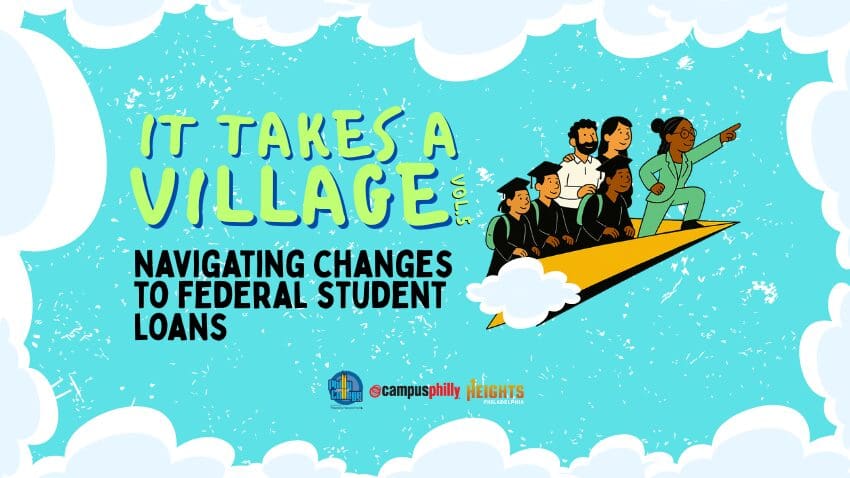
That’s exactly why PhillyGoes2College, Heights Philadelphia, and Campus Philly brought in the experts for Vol. 5 of our It Takes a Village series. Attorneys and paralegals from Community Legal Services (CLS) — the folks who provide free civil legal help to low-income Philadelphians — broke it all down live. We also heard from Sharon Ward, Deputy Chief at the Mayor’s Office of Education, about what Philadelphia is doing to support its 230,000+ residents dealing with student loan debt.
Watch the full session below, then keep reading for the key takeaways.
🎓 First, Let’s Zoom Out: The Student Loan Crisis Is Real
Before we get into the new rules, here’s the context: there are 45 million Americans carrying $1.7 trillion in student loan debt right now. Nearly 25% of them are in default. And here’s the part that doesn’t get talked about enough — 40% of borrowers don’t even have a degree to show for it.
In Pennsylvania alone, 1 in 5 borrowers is over the age of 50. This isn’t just a young people’s problem. It hits parents, grandparents, working adults — anyone who borrowed to invest in education.
And the system itself? Carrie Smith, CLS Attorney, put it plainly: it’s been “often mismanaged.” CLS has seen clients getting their Social Security garnished — people who should have been in a $0 monthly payment plan but were never enrolled properly. One study found that 2 million people had been paying into income-driven repayment plans for 20 years — and only 157 had actually been forgiven. Why? Some servicers weren’t even keeping track of payments.
That’s the backdrop. Now here’s what’s changing.
📋 What the “One Big Beautiful Bill” Actually Does
The OBBBA makes sweeping changes to the student loan system. Here’s what you need to know starting July 1, 2026:
New Borrowing Limits — This Is Big for Parents
Parent PLUS Loans — the loans parents take out for their child’s college education — are getting hard caps:
- $20,000 per year annual limit
- $65,000 lifetime per child
Before this law, parents could borrow up to the full cost of attendance. That’s gone. If you’re a parent who relies on Parent PLUS loans to cover tuition, room, and board, you need a new financial plan — and private loans (which come with fewer protections and no income-based repayment options) will increasingly fill that gap.
Graduate students face similar limits. Graduate PLUS loans — which previously allowed borrowing up to the full cost of attendance — are being eliminated entirely.
Bottom line: more borrowers are going to be pushed into the private loan market, which has higher interest rates, requires co-signers, and offers far fewer protections if things go wrong.
New Repayment Plans
Currently, borrowers have choices — fixed plans and income-driven repayment (IDR) plans like IBR, PAYE, and SAVE. Starting July 1, new borrowers will only have two options:
- New Tiered Standard Plan — A fixed plan like a car payment or mortgage. Not based on your income. Payments depend on total debt and a 10-25 year repayment timeline. Not eligible for any loan forgiveness programs.
- RAP (Repayment Assistance Plan) — The new income-driven option. Minimum payment is $10/month (previously, plans could go as low as $0). No maximum payment cap — if you earn over $100K/year, payments can reach $833/month. Forgiveness comes after 30 years (vs. 20-25 under current plans). RAP is eligible for Public Service Loan Forgiveness (PSLF).
If you’re a current borrower, you can keep access to IBR — but SAVE, PAYE, and ICR are being phased out. And if you take out even one new loan after July 1, 2026 — or consolidate after that date — you lose access to IBR entirely and get locked into the new plans only.
⚠️ The #1 Thing Parent PLUS Borrowers Need to Do Right Now
If you have existing Parent PLUS loans and you want to maintain access to income-driven repayment (and potentially Public Service Loan Forgiveness), you must consolidate your loans before July 1, 2026. Then enroll in ICR and make at least one payment before it sunsets — which gives you a path to IBR going forward.
Once July 1 hits, any new Parent PLUS loan — even if you already have existing ones — will lock you into the Standard Plan only. No IDR. No forgiveness.
If you work for the city, a nonprofit, or a government agency, this matters even more. Public Service Loan Forgiveness (PSLF) forgives your balance after 10 years of qualifying payments. But if you take out a Parent PLUS loan after July 1 and can’t access IDR, you lose your path to PSLF entirely.
🚨 If You’re in Default: Don’t Ignore This
After 270 days (9 months) of missed payments, your federal loans go into default. Right now, 25% of student loan borrowers are in default. And involuntary collections — wage garnishment, tax refund seizure, Social Security offsets — are about to restart.
CLS Attorney Tom Ferrant made it plain: the federal government can garnish your wages, take your tax refund, and pull from your Social Security without going to court. There’s no statute of limitations.
If you’re in default or close to it, you have two main paths out:
- Loan Consolidation — Gets you out of default, but be mindful of that July 1 deadline. Consolidating after that date changes your repayment options permanently.
- Loan Rehabilitation — A one-time option (soon to be available twice) where you make 9 payments over 10 months based on your income.
If you think your tax refund may be at risk, call the Treasury Offset Program at 1-800-304-3107 to check.
🏙️ What Philadelphia Is Doing About It
Sharon Ward from the Mayor’s Office of Education delivered some real talk: Philadelphia ranks dead last among 50 major U.S. cities on economic mobility. Mayor Parker isn’t accepting that — and student loan debt is part of the solution.
Here’s what’s coming from the city:
- New website launching mid-April 2026 with resources and up-to-the-minute info on student loan changes
- Information sessions with community partners (like this one) to help Philadelphians navigate their options
- Individual counseling for urgent/complex cases launching this summer
- Support for city employees, educators, and nonprofit workers pursuing Public Service Loan Forgiveness
That last point is major. The city’s Office of Human Resources ran a PSLF support program that resulted in $140 million in loan forgiveness for city employees alone. That’s money that helps people buy houses, fund their kids’ college, and build generational wealth. If you work in public service, don’t leave that on the table.
📚 Resources to Use Right Now
Community Legal Services (CLS) — Free civil legal help for low-income Philadelphians, including student loan support, default navigation, and forgiveness applications. 🔗 clsphila.org
Federal Student Aid — Check your loans, your servicer, and your repayment status. 🔗 studentaid.gov
EDCAP — Free student loan repayment calculators and one-on-one counseling. Federal loans are federal, so their tools apply to you even though they’re NYC-based. 🔗 edcap.org
Philadelphia Financial Empowerment Centers — Free budget counseling citywide to help you figure out what loan burden is actually manageable for your income. 🔗https://www.phila.gov/programs/financial-empowerment-centers/
Mayor’s Office of Education — New student loan hub launching mid-April 2026. 🔗 https://www.phila.gov/departments/mayors-office-of-education/
Treasury Offset Program — Check if your tax refund is at risk of being seized. 📞 1-800-304-3107
🤝 About It Takes a Village
It Takes a Village is a free virtual event series hosted by PhillyGoes2College, Heights Philadelphia, and Campus Philly — three organizations committed to economic mobility through education for Philly students and families. We bring real experts to answer real questions about financial aid, college planning, and the tools you need to navigate what comes next.
Next session: End of April 2026. Stay connected so you’re first to know.
Connect With Our Partner Organizations
PhillyGoes2College — Your go-to resource for college access, scholarships, and financial literacy in Philadelphia. 🌐 phillygoes2college.org | 📸 @phillygoes2college_ | 📺 YouTube
Heights Philadelphia — Supporting Philly students from high school through college completion. 🌐 heights.org | 📖 Step Up to College Guide | 📸 @HeightsPhilly | 👍 /HeightsPhilly | 🎵 @HeightsPhiladelphia
Campus Philly — Connecting diverse college students and recent grads to careers and community in Greater Philadelphia. 🌐 campusphilly.org | 💼 Career Hub | 📸 @campusphilly
This blog post was created as a companion resource to the It Takes a Village Vol. 5 webinar. It is for informational purposes only and does not constitute legal advice. For help specific to your situation, please contact Community Legal Services or a qualified student loan counselor.
