
How Dr. Safiya Shabazz’s Journey Shows Students What’s Possible in Education, STEM, and Community Health
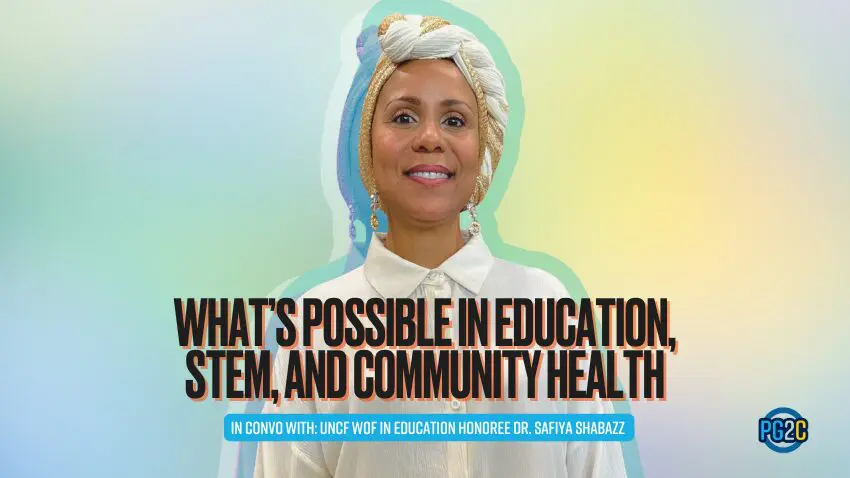
This summer, we had the honor of interviewing Dr. Safiya Shabazz at UNCF Philly’s Afternoon Tea: Women of Faith and Education. She was being honored for her leadership in medicine and the difference she’s made in the community.
In our conversation, Dr. Shabazz shared insights that speak directly to students, especially those exploring STEM, healthcare, and college pathways. Her story is deeply rooted in education—her own, the students she mentors, and the generations she hopes to inspire.
Education Has Always Been Part of the Story
Dr. Shabazz told us she has known about UNCF since childhood, calling it a long-standing organization that “keeps the flame of education burning bright” for African American students aspiring to become college graduates and community leaders.
Her path through school and beyond really shows that commitment in action:
-
University of Pennsylvania for undergraduate studies
-
Majored in chemical engineering
-
Worked professionally before circling back to apply to medical school
-
Earned her medical degree from Penn
-
Completed a residency in family medicine
If there’s one thing her story makes clear, it’s that careers almost never go in a straight line. Trying new things, changing your mind, and chasing what matters to you—that’s all part of figuring it out.
Advice for Students: You Can Do Many Things—Just Not All at Once
When we asked how she balances her wide range of interests, from engineering to medicine to creative hobbies, she shared a message many students need to hear:
“You can do it all, but you can’t do it all at once.”
For students juggling classes, jobs, passions, and real-life responsibilities, her message is simple:
-
Take care of your physical and mental health
-
Pace yourself
-
Stay open to new paths
-
Remember you always have a choice
STEM Belongs to You—Even When It Doesn’t Feel Like It
Dr. Shabazz spoke right to African American and Muslim students who are thinking about STEM but might not see themselves in those spaces yet.
She reminded us that African American people have contributed to science, engineering, surgery, and astronomy for centuries—and that students today are part of that legacy.
Her message to students:
-
Know the history you come from
-
Understand that intelligence and innovation are part of your lineage
-
Don’t let doubt keep you from stepping into spaces where you belong
Why Representation in Medicine Matters for Education and Community Health
If there’s one thing that stood out in talking with Dr. Shabazz, it’s how education, representation, and community health are all connected.
She pointed out that even though more than 40% of Philly’s population is African American, only about 6% of doctors are. And when there are more African American primary care doctors in a community, African American residents actually live longer—even if that doctor isn’t their own.
Representation not only shapes medical care—it shapes:
-
Policy
-
Access
-
Training opportunities
-
The visibility of students entering the pipeline
At her practice, Dr. Shabazz mentors future healthcare professionals—helping train the next generation of doctors and PAs, and getting their support in return.
Building a Pipeline of Future African American Physicians
Through her work with the Medical Society of Eastern Pennsylvania, Dr. Shabazz has seen just how important it is to build up the pipeline of African American and BIPOC medical professionals.
Education is at the center of that work.
The more students see themselves in medicine, and the more chances they get for mentorship and real-world experience, the stronger our communities get.
Her Message to Students Today
If Dr. Shabazz could go back and talk to her high school self, she’d give the same advice she hopes students hear today:
Believe in yourself, even when confidence is still catching up.
Stay the course.
Keep purpose at the center of your decisions.
And know that you have what it takes to make it through the challenges ahead.
Watch the Full Interview
See Dr. Shabazz’s full conversation and subscribe for more stories that highlight pathways in education, STEM, and community leadership:
